

2514 Hollywood Blvd STE 408
Hollywood, FL 33020
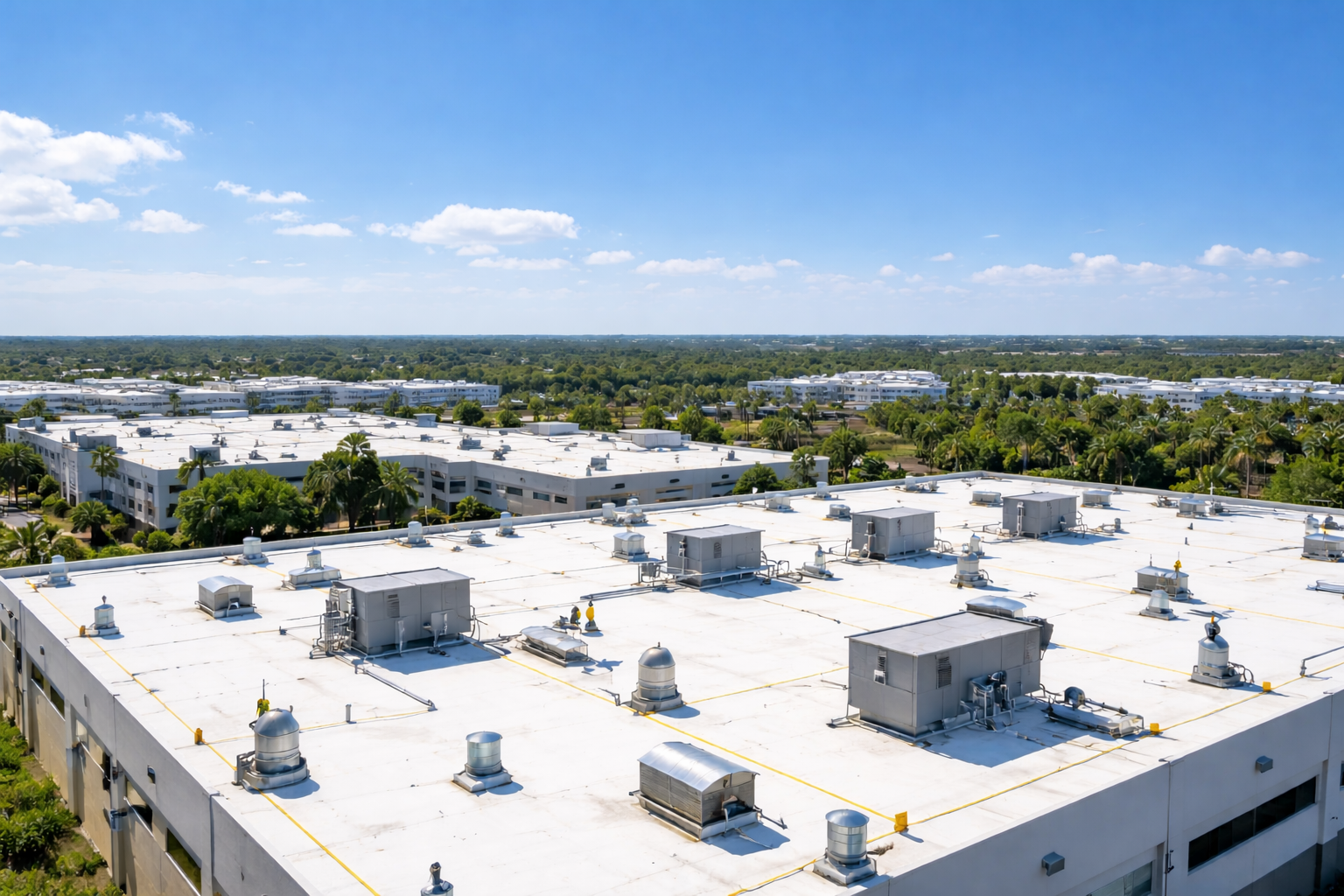
Most commercial roof problems do not start as emergencies. They start as small failures at seams, flashing, drains, and transitions, then quietly worsen until one storm exposes the weak point. The reason roof inspections matter in Pembroke Pines is simple: this climate does not give roofing systems much forgiveness. Heat stresses materials daily, storms test details repeatedly, and moisture stays active longer once it gets into the system.
If you manage a commercial property, the real question is not whether inspections are needed. The question is how often you need them to avoid the common cycle: leak, patch, leak again, interior damage, tenant complaints, and rushed decisions under pressure.
This is exactly why commercial roofing in Pembroke Pines, FL should be managed as a system, not treated as a reaction after something goes wrong.
For most commercial properties in Pembroke Pines, the baseline that keeps risk under control is:
●
Two scheduled inspections per year
●
One additional inspection after any major storm event
●
Extra checks for older roofs, roofs with recurring leak history, or roofs with drainage issues
This is not overkill. It is the simplest schedule that catches wear before it becomes costly. The roof takes the most damage in predictable periods: before storm season, after storm season, and after high-wind rainfall events. Skipping those windows usually means the first sign of trouble appears inside the building instead of being handled on the roof.
In South Florida, roofs age faster because the stress is constant. Heat causes expansion and contraction. That movement weakens seams and flashing over time. Heavy rain tests drainage and pushes water toward the weakest connections. Wind uplift stresses edges and penetrations even when there is no visible “damage.”
A twice-per-year inspection schedule works because it matches the way problems develop:
●
Early wear is detectable before leaks appear
●
Drainage problems are caught before ponding becomes routine
●
Small flashing issues are corrected before water travels into insulation
●
Repairs stay targeted instead of turning into larger scopes later
When inspections do not happen, the roof does not suddenly become worse. It simply becomes unknown, and unknown roofs are where budgets get hit hardest.
Some roofs need more attention because the system is already at higher risk. It is common to increase inspection frequency when:
●
The roof is
older or approaching end-of-life age for the system
●
The building has
recurring leak history, even if repairs were completed
●
There are known
ponding water areas or chronic drainage issues
●
The roof supports
heavy rooftop equipment and has frequent trade access
●
You manage
tenant spaces where a single leak creates operational disruption
●
The building has previous
patch layers that make leak paths harder to predict
In these cases, quarterly checks can be a smart move because they stop the “leak cycle” from building momentum. The goal is not to inspect for the sake of inspecting. The goal is to prevent minor deterioration from becoming moisture spread that forces bigger decisions.
A real inspection is not a quick walk and a generic report. A roof inspection should focus on the failure points that cause most commercial leaks:
Seams and membrane condition
Seams are one of the first places stress shows up. Separation, lifting, or early deterioration often appears here before a leak is visible inside.
Flashing and penetrations
Pipe penetrations, curbs, vents, and rooftop equipment areas are common entry points. Flashing should be checked for cracking, separation, lifting, and compatibility issues from prior repairs.
Edges, parapets, and transitions
Wind-driven rain and uplift stress these areas heavily. Failures at transitions can allow water entry that travels inward.
Drainage performance
Drains, scuppers, and flow paths matter. Clogs, slope changes, and ponding zones should be identified and corrected early.
Signs of trapped moisture
Soft areas, unusual surface changes, or repeated interior complaint zones may indicate moisture in insulation layers.
Photo documentation and clear findings
The inspection should leave you with proof of what is happening and a clear recommendation on what matters now versus what can be monitored.
This is the difference between “we looked at it” and a commercial roof inspection in Pembroke Pines that actually prevents future disruption.
Flat and low-slope systems are common on commercial buildings, and they behave differently than steep roofs when water gets in. Moisture can travel across the system before dropping into the building. That creates the illusion that leaks are random, when they often trace back to predictable failure zones.
That is why flat roof inspections matter so much. They focus on drainage, seams, and detail integrity, because that is where flat roofs lose reliability first. The faster those issues are identified, the more controlled the repair scope stays.
Most owners do not skip inspections because they do not care. They skip them because nothing seems urgent yet. The problem is that roofs often become expensive long before they become dramatic.
Skipping inspections tends to lead to:
● Interior damage that spreads before the leak is located
●
Tenant frustration and repeated service calls
●
Emergency response costs and rushed approvals
●
Wet insulation that turns small repairs into larger corrective scopes
●
Shortened roof life because small issues were allowed to compound
This is why preventative roofing maintenance is not about being cautious. It is about keeping decision-making calm and controlled, instead of letting the next storm decide your budget.
If the building has a history of repeated leaks, the first step is not simply “inspect more.” The first step is to make sure the inspection is diagnosing the true failure points instead of treating symptoms.
Recurring leaks usually mean one of three things:
●
The entry point was never corrected
●
Multiple vulnerable zones exist and the roof is now failing as a system
●
Drainage or transition issues are accelerating wear faster than repairs can keep up
A proper inspection should connect the interior leak pattern to roof-level failure points, then recommend a scope that stops repeat intrusion instead of shifting it.
If you manage a commercial property in Pembroke Pines, inspections are what keep leaks from turning into tenant issues and emergency costs. Schedule commercial roof inspections before and after storm season, and after major weather events, so problems are identified early and corrected while the scope is still controlled.
How often should commercial roofs be inspected in Pembroke Pines?
Most commercial roofs should be inspected twice per year, usually before and after storm season, plus an additional inspection after major storms or high-wind rain events.
What counts as a “major storm” that should trigger an extra inspection?
Any event with strong winds, wind-driven rain, visible debris impact, or reports of interior leaks should trigger an inspection, even if the roof looks fine from the ground.
What does a proper roof inspection check on a commercial building?
A proper inspection reviews seams, flashing, penetrations, edges, parapet transitions, drainage performance, ponding areas, prior repair zones, and any signs of trapped moisture, with photo documentation.
Why do flat roofs need more frequent inspections than other roof types?
Flat systems rely heavily on drainage and detailed sealing at seams and transitions. When water gets in, it can travel under the system before showing inside, which makes early inspection critical.
If there are no leaks, is an inspection still necessary?
Yes. Most costly roof problems begin as small failures that are easy to correct early. Waiting for a leak often means moisture has already spread into insulation or interior areas.
How do I know if my building needs inspections more than twice a year?
More frequent inspections are common for older roofs, roofs with recurring leaks, roofs with ponding water or drainage issues, and buildings with heavy rooftop equipment or frequent roof access.
What is the biggest risk of skipping roof inspections in South Florida?
The biggest risk is hidden moisture spread. Small issues become larger scopes, emergency repairs, interior damage, tenant complaints, and shortened roof life because problems were not caught early.
What should I expect to receive after a commercial roof inspection?
You should receive clear findings, photo documentation of problem areas, notes on risk level, and a straightforward recommendation on next steps, not a vague summary.
Can roof inspections help extend roof lifespan?
Yes. Inspections identify early wear and drainage issues before they cause repeat leaks and system deterioration, which helps preserve roof performance and delay major replacement decisions.
Is preventative roofing maintenance different from an inspection?
Yes. An inspection identifies issues and documents condition. Preventative maintenance includes corrective actions like sealing vulnerable details, clearing drains, and addressing early wear to prevent leaks.
CGC1537535 | CCC1335982 | CMC1251555
At C.A.R.E. Construction, we uphold industry standards by using top-quality materials, cutting-edge tools, and delivering exceptional service to our clients.

2514 Hollywood Blvd STE 408
Hollywood, FL 33020

Broward:
Miami:
Tampa:
