

2514 Hollywood Blvd STE 408
Hollywood, FL 33020
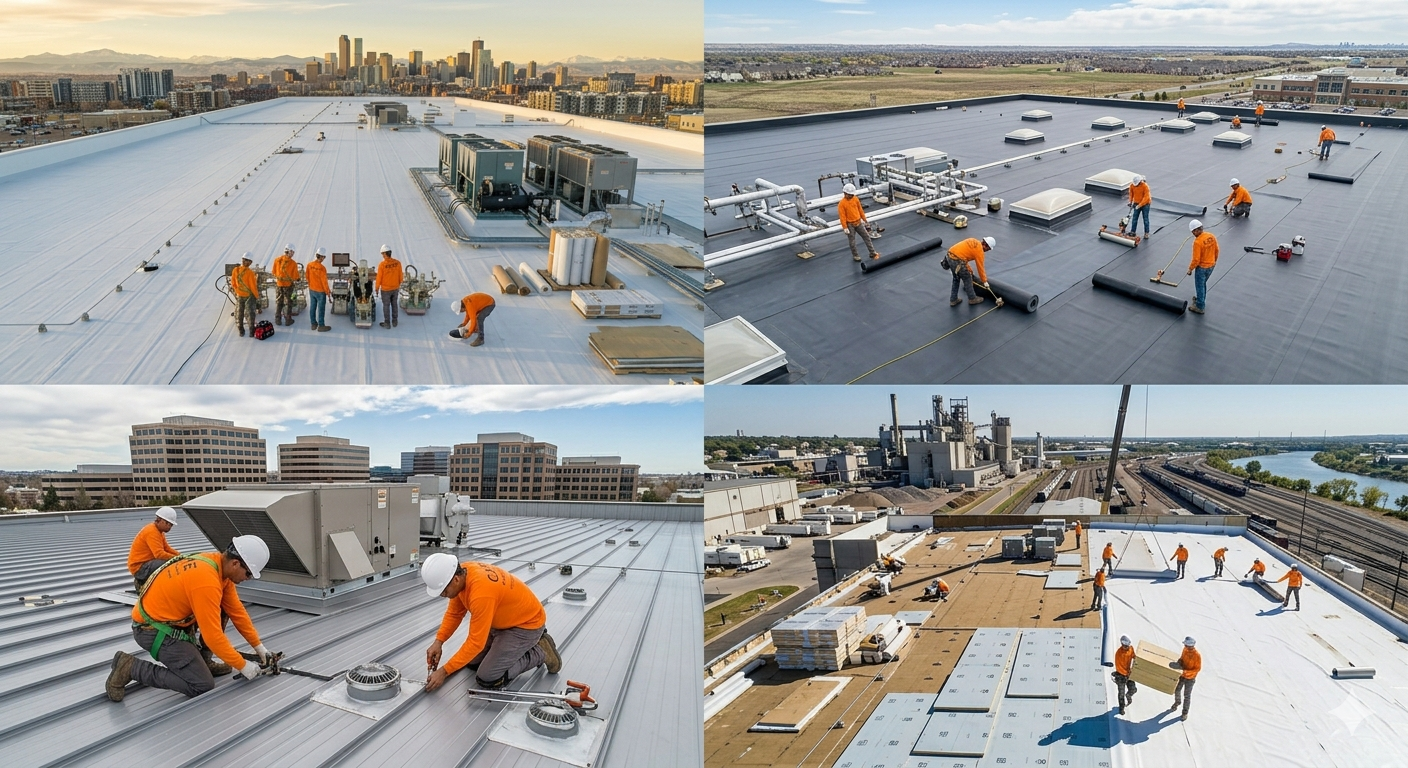
There is no single date when every commercial roof in South Florida suddenly needs replacement. Roofs do not work that way. Some fail early because drainage was poor, maintenance was inconsistent, or weather exposure kept stressing the same weak points. Others last longer because the system was installed well, monitored closely, and repaired before damage spread too far. That is why commercial roofing in Hollywood, FL should never be judged by age alone. Most commercial roofs generally last about 20 to 30 years, but climate, drainage, installation quality, material type, and maintenance all affect where a specific roof falls in that range.
In South Florida, the bigger question is not just how old the roof is. The better question is whether the system is still performing reliably under heat, UV exposure, humidity, and storm pressure. A roof that is still technically “within range” may already be costing the building too much in repairs, leaks, and disruption. A roof that is older may still be worth keeping if the system remains dry, stable, and well maintained. That is why a roof replacement timeline is really a condition question first and an age question second.
South Florida is hard on commercial roofs. Heat drives daily expansion and contraction. UV exposure slowly dries and weakens materials. Heavy rain tests seams, flashing, and drainage repeatedly. Storms and high winds can stress edge details and create subtle damage that is easy to miss from the ground. All of that means commercial roof lifespan in Florida is shaped as much by exposure and upkeep as by the calendar. Carlisle recommends inspections at least every six months and immediately after severe weather, while NRCA notes maintenance is one of the most important factors in determining a roof system’s life span and cost.
That is why two roofs installed in the same year can age very differently. One may still be stable because drains stay clear, repairs were done properly, and post-storm reviews caught problems early. The other may already be heading toward replacement because moisture was allowed to stay trapped, seams kept failing, or recurring leaks were treated as isolated incidents instead of signs of wider system decline. GAF and Carlisle both emphasize that regular maintenance can extend service life and reduce larger repair costs over time.
Owners often ask when to replace roof systems as if there is a universal age marker. In reality, replacement becomes the serious conversation when the roof stops behaving like a reliable system. That usually shows up in patterns. Leaks return in the same zones. Repairs happen more frequently. Moisture spreads farther than expected. Drainage problems keep stressing the same areas. Cooling costs rise because insulation or reflective performance is no longer what it should be. Advanced Roofing’s Florida replacement guidance notes that rising cooling costs can be a sign of compromised insulation or reflective performance, while GAF’s replacement-versus-coating guidance points out that wet substrate and broader moisture spread can push a roof toward complete tear-off.
At that stage, a roof may still be repairable in isolated sections, but the real question becomes value. If each repair only buys a little time before the next problem appears, the roof is no longer delivering predictable performance. That is where owners begin spending like they are “maintaining” the roof when they are actually drifting toward replacement without planning it properly.
The strongest replacement decisions usually come from roof aging signs, not from a warranty anniversary. Some of the clearest signs include frequent leaks, visible membrane deterioration, recurring ponding issues, failing flashing, seam separation, soft spots, insulation moisture, blistering, sagging, and repeated post-storm problems. Florida-focused roofing guidance and broader commercial roofing sources consistently point to recurrent leaks, visible damage, and system-wide deterioration as replacement indicators.
The key is not to isolate one symptom and judge the whole roof from that. One stain inside does not automatically mean replacement. One older roof does not automatically mean replacement either. What matters is whether the symptoms suggest the system is still fundamentally sound or whether failures are becoming broad, connected, and expensive to keep chasing.
One of the hardest calls for any owner is replacement vs repair roofing. Repairs make sense when failures are limited, the surrounding system is still dry and stable, and the correction is likely to hold. Replacement makes more sense when damage is widespread, moisture has spread through the assembly, or the building is now stuck in repeated patch cycles. GAF’s recent guidance notes that moisture surveys are important because broad substrate moisture can shift the decision toward complete tear-off, particularly when wet areas are extensive.
That is why good decisions come from condition documentation, not from frustration alone. If the roof is leaking in multiple zones, wet substrate is present, and repairs have stopped lasting through weather cycles, replacement is often the cleaner long-term financial decision. If the roof is aging but stable, with limited and well-understood issues, targeted repairs or restoration may still be the better path.
In South Florida, roofs often need replacement sooner than owners in milder climates expect. Heat and UV speed material aging. Rain and humidity make moisture harder to dry out once it gets inside. Storms add stress to every weak detail. NOAA data and regional weather patterns show the area regularly experiences intense rainfall and long warm seasons, which helps explain why climate pressure matters so much to roof performance.
This does not mean every roof in Hollywood will fail early. It means the margin for neglect is smaller. A roof in South Florida can still perform well for many years, but only if the system is maintained, inspected after major weather, and kept dry enough to preserve its integrity. Carlisle’s owner guidance and GAF maintenance materials both stress six-month inspections and immediate review after severe weather because hidden damage is common even when the roof looks fine from below.
The worst time to replace a commercial roof is when the building no longer has a choice. That usually means active leaks, interior disruption, tenant frustration, and rushed decision-making. The best time is when inspection findings show that repairs are losing value and the roof is moving toward broader system failure, but the project can still be planned calmly around budgets and operations. Florida replacement guidance consistently warns that waiting too long leads to more interior damage, more moisture spread, and fewer options.
Planned replacement protects more than the roof. It protects scheduling, tenant communication, building operations, and financial control. That is often the difference between a strategic capital project and an emergency that costs more than it should.
A commercial roof does not need to collapse to be ready for replacement. Once leaks keep returning, repairs stop lasting, or weather exposure keeps reopening the same weak areas, the roof may already be telling you that patching is no longer the smart long-term move. C.A.R.E. Construction helps property owners in South Florida evaluate real roof condition, weigh repair against replacement honestly, and move forward before ongoing damage turns a manageable decision into a forced one.
How often do commercial roofs usually need replacement in South Florida?
There is no fixed replacement year for every roof, but many commercial systems generally fall in the 20 to 30 year range, with climate, material, drainage, installation quality, and maintenance all affecting the real timeline.
Does age alone mean a commercial roof should be replaced?
No. Age matters, but condition matters more. An older roof may still have useful life if the system is dry and stable, while a younger roof can need replacement sooner if weather, drainage, or maintenance problems have accelerated failure.
What signs usually mean replacement is getting close?
Frequent leaks, membrane deterioration, soft areas, repeated seam or flashing failures, ponding issues, moisture spread, and repairs that no longer last are common signs the roof is moving toward replacement territory.
How do I know if repairs still make sense?
Repairs usually make sense when failures are isolated and the surrounding roof remains stable and dry. Once problems are widespread or recurring across multiple areas, replacement often becomes the more reliable option.
Why does the South Florida climate shorten roof life?
Heat, UV exposure, humidity, heavy rain, and storms all add stress. They speed material aging, keep moisture active longer, and expose weak details faster than in milder climates.
How often should a commercial roof be inspected in Florida?
Manufacturer guidance commonly recommends inspections at least every six months and immediately after severe weather events. That helps catch damage before it turns into broader system failure.
CGC1537535 | CCC1335982 | CMC1251555 | CFC1434506
At C.A.R.E. Construction, we uphold industry standards by using top-quality materials, cutting-edge tools, and delivering exceptional service to our clients.

2514 Hollywood Blvd STE 408
Hollywood, FL 33020

Broward:
Miami:
Tampa:
