

2514 Hollywood Blvd STE 408
Hollywood, FL 33020
Commercial roofs in Pembroke Pines do not usually fail because of one dramatic event. They fail because a few predictable problems are allowed to repeat until the system can no longer keep water out. What starts as a “small” leak turns into damaged insulation, interior loss, tenant complaints, and emergency repairs that cost more than the original issue ever should have.
That pattern is common in commercial roofing in Pembroke Pines, FL because this climate punishes weak details. Heat stresses membranes. Storms test edges and penetrations. Humidity keeps moisture active longer. And flat roof drainage issues create the perfect conditions for recurring damage when maintenance is delayed.
Below are the most common roofing challenges commercial buildings deal with in Pembroke Pines, why they happen, and what they tend to cost owners when ignored.
One of the most frustrating problems for property owners is a leak that seems to change location. One month the stain is near a hallway. The next month it shows up above a tenant’s back room. That is usually not multiple leaks. It is often one entry point where water is travelling under the system before it becomes visible inside.
This is why quick patching can feel like it works until the next storm. If the repair is done where the leak appears inside, rather than where water actually enters, the roof keeps “leaking” even though money has already been spent.
These are the types of commercial roof problems in Pembroke Pines that create repeat service calls and rising costs, because the building is paying to treat symptoms instead of fixing the failure point.
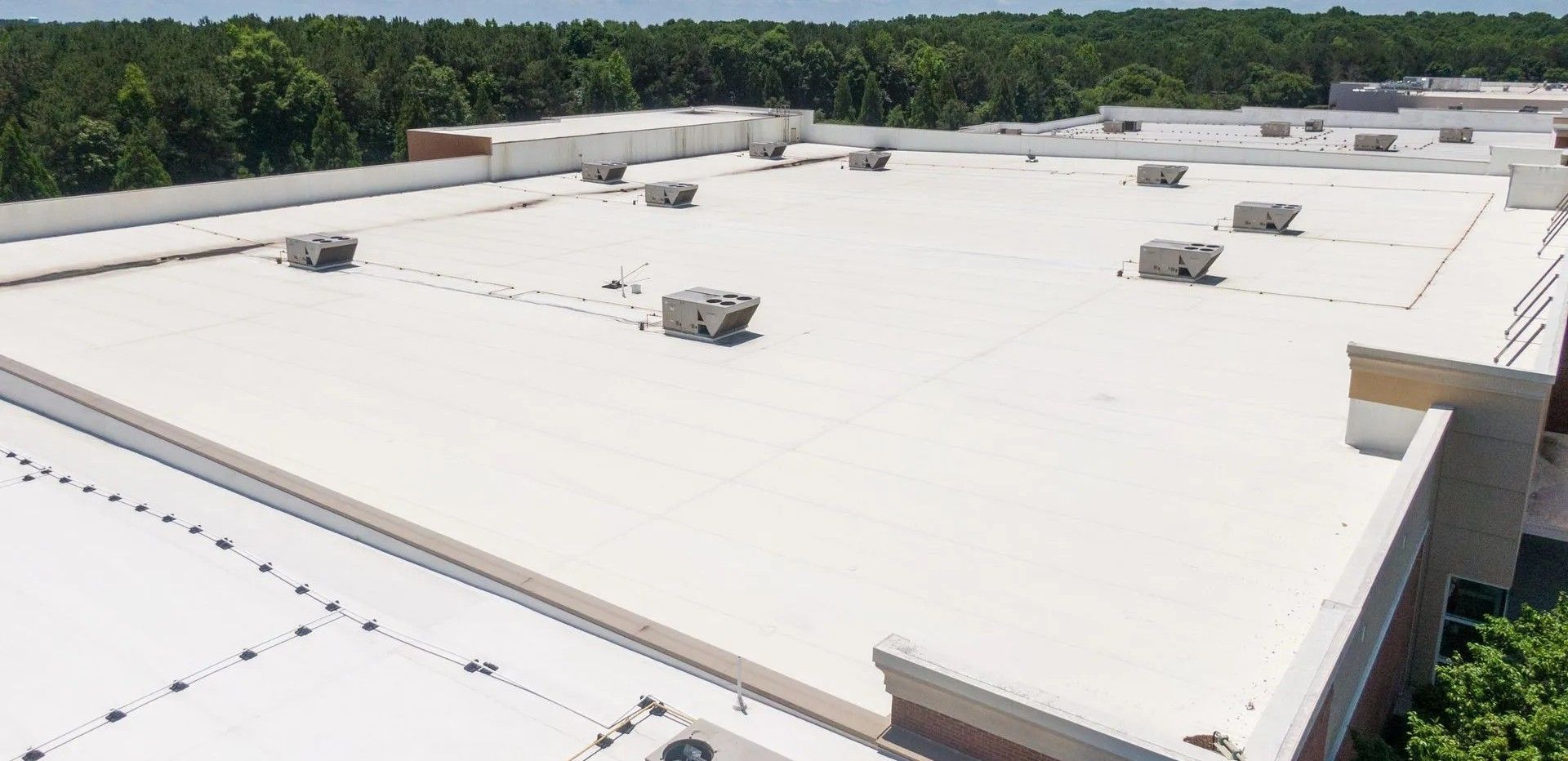
Many commercial buildings in Pembroke Pines have low-slope or flat roof systems, and water management is one of the biggest factors that decides whether the roof lasts or breaks down early.
When drains are clogged, scuppers back up, or slope is compromised, ponding water becomes a regular condition. Water sits longer than it should, which increases heat absorption and accelerates membrane wear. It also increases the chance of water forcing its way into seams, edges, and penetrations, especially during heavy rain or wind-driven storms.
Ponding water also hides developing damage. If water consistently sits over the same section, it becomes harder to spot seam separation, surface wear, and early membrane breakdown until the roof is already compromised.
This is one of the most common flat roof issues in Pembroke Pines, and it is also one of the easiest problems to prevent when maintenance is consistent.
Heat does not simply “wear” a roof out slowly. It creates constant movement. Roof surfaces expand during the day and contract at night, and that cycle repeats endlessly throughout the year.
Over time, daily movement stresses seams and attachment points. Adhesives can weaken. Welded seams can begin to separate. Edges and transitions can loosen, especially if installation methods were not handled correctly or if the system has reached later stages of life.
This issue becomes more visible after storms because wind uplift adds stress to a system that is already fatigued. Once seams begin to weaken, small openings become active leak paths very quickly.
Most repeat leaks in commercial buildings do not start in the open field of the roof. They begin where different materials meet and where the system must seal around openings. That includes penetrations like vent pipes, mechanical units, and rooftop equipment.
When flashing dries out, cracks, or separates, it creates a direct path for water. These areas are also vulnerable because they experience movement, vibration, and changes in temperature more intensely than flat surfaces.
Penetration issues also tend to be overlooked because they require close inspection. That is why property owners often discover the problem only after interior damage occurs.
Roof edges and parapet transitions are common failure zones in South Florida because they take direct exposure to wind-driven rain and storm uplift.
When edge terminations weaken, water can enter the system at the perimeter and travel inward. Parapet transitions also experience movement and cracking, especially when moisture intrusion and heat are both in play.
These failures are costly because they often require more involved repairs. They also contribute to the “mystery leak” problem because water may travel far before it becomes visible inside.
Many commercial roofs end up costing far more than expected because maintenance is treated as optional until something fails. The result is that the roof is not being monitored while damage spreads underneath.
A small seam issue can allow moisture into insulation. Wet insulation loses thermal performance and keeps moisture active. That accelerates deterioration and makes repairs more expensive because the system is no longer dry and stable.
This is why commercial roof maintenance in Pembroke Pines matters so much. It is not about “checking a box.” It is about catching the problem while the repair is still small and the roof still has usable life.
Not all storm damage is dramatic. A roof can look fine from the parking lot while edge details loosen, flashings shift, seams stress, and water begins entering through minor openings.
Wind uplift can weaken attachment points. Flying debris can create punctures. Heavy rain can expose drainage weaknesses. These issues often do not become visible until the next rain cycle, when water finds its path into the building.
This is why post-storm inspections matter. The roof may not be “destroyed,” but it may be compromised enough that the next storm turns a manageable issue into a major one.
A major challenge in commercial properties is not the roof itself. It is decision-making under uncertainty. Many owners are asked to approve repairs or replacements without clear documentation of what is failing and why.
That creates two common outcomes: the wrong repair is approved, or the right work is delayed until damage worsens. Both are expensive.
Clear documentation, detailed inspection, and a recommendation based on the roof’s actual condition is how owners avoid paying twice.
Pembroke Pines commercial properties face a specific combination: heat that stresses systems year-round, storms that expose weak details, humidity that keeps moisture active longer, and flat roof drainage that must be maintained consistently to avoid ponding and intrusion.
That is why Pembroke Pines commercial buildings roofing requires a contractor who understands how these systems fail locally, and how to correct the real failure points before problems repeat.
Most “roof issues” in Pembroke Pines are not one-time events. They repeat because the real entry point was never identified, drainage keeps backing up, or seams and flashing keep getting stressed after every storm. That is how one leak turns into interior damage, tenant complaints, emergency calls, and a bigger scope that costs far more than it should have.
If your building is dealing with recurring leaks or roof concerns, contact C.A.R.E. Construction for a roof assessment that documents what is failing and what it will take to stop it, so you can approve the right fix before the next storm makes it worse.
Because many repairs address where water shows up inside, not where it actually enters. Water can travel under the roof system before it becomes visible, so the leak appears “fixed” until the next heavy rain exposes the true entry point again.
The most common causes are seam separation, failing flashing around penetrations, clogged drains or poor runoff, and weak transitions at parapet walls and edges. These areas take the most stress from heat, storms, and movement.
It is a real problem. Standing water accelerates membrane wear, increases heat stress, and raises the chance of water pushing into seams and transitions. It also hides developing damage until the roof is already compromised.
Signs include recurring leaks in multiple areas, widespread seam or flashing failures, frequent repairs that do not last, soft spots, and moisture-related interior issues. When problems are no longer isolated, repairs stop being predictable.
Seams, flashing around rooftop penetrations, drains and scuppers, parapet transitions, edge terminations, and any areas with past repairs. These zones are where most repeat failures begin.
No. Wind uplift, shifting flashing, punctures, and loosened edge details often are not visible from the ground. The roof can look fine while water begins entering through small openings.
At least twice per year, and after major storms. That schedule helps catch drainage problems and early system wear before they turn into interior damage and emergency repairs.
When leaks keep returning in the same zones, the roof is aging broadly, and the cost of repeated repairs is climbing. Re-roofing can stop the cycle when the structure is still sound but the system is worn.
When failures are widespread across the system, moisture has compromised insulation, or repairs no longer hold. At that point, replacement is often the only way to restore reliability and protect operations.
It is rarely just the roof repair. Delays can lead to interior damage, inventory or equipment loss, tenant disruption, mold complaints, and emergency work that forces rushed decisions and higher costs.
CGC1537535 | CCC1335982 | CMC1251555 | CFC1434506
At C.A.R.E. Construction, we uphold industry standards by using top-quality materials, cutting-edge tools, and delivering exceptional service to our clients.

2514 Hollywood Blvd STE 408
Hollywood, FL 33020

Broward:
Miami:
Tampa:
