

2514 Hollywood Blvd STE 408
Hollywood, FL 33020
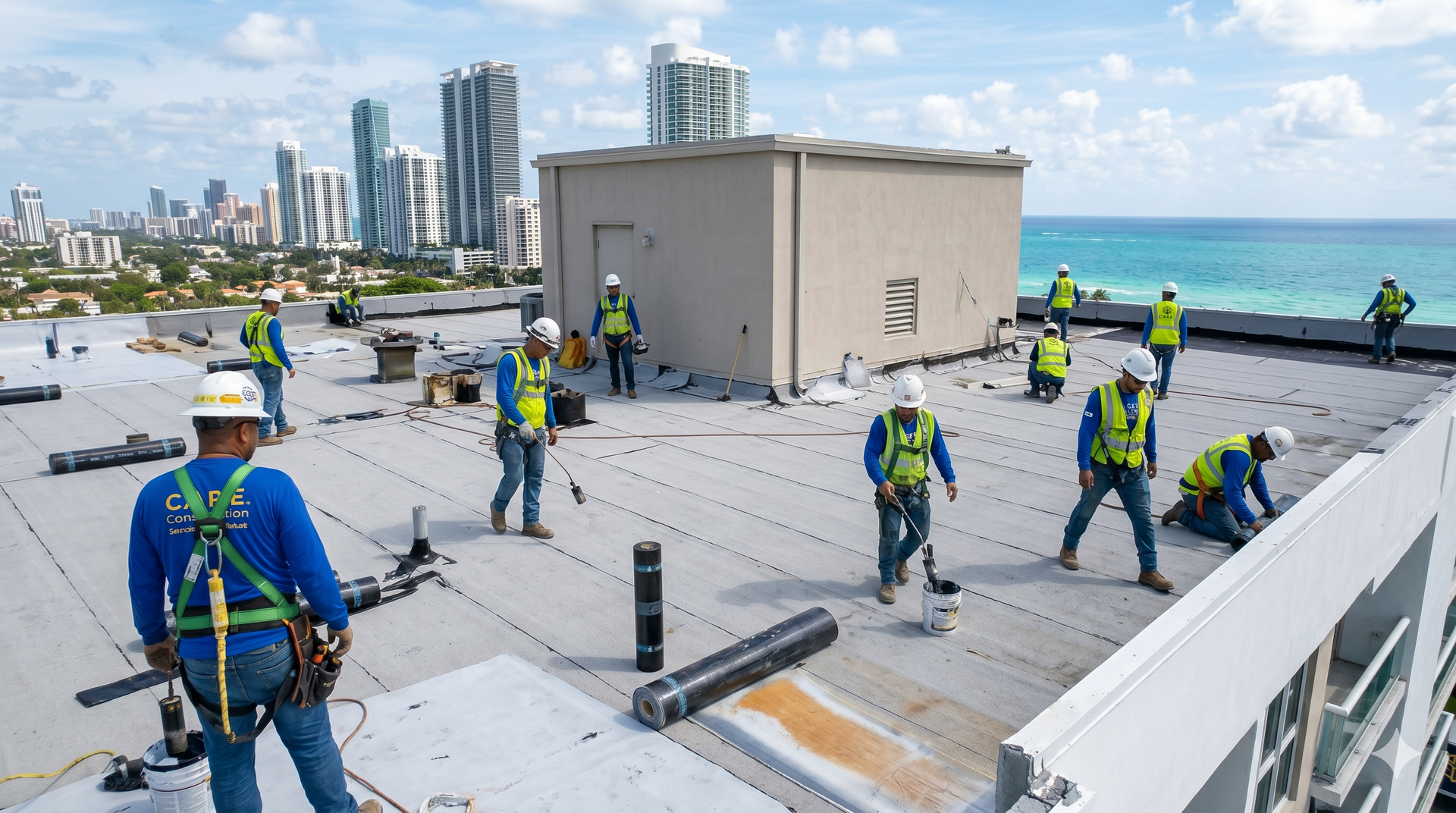
When people think about roof damage, they usually picture one big storm. But in Florida, commercial roofs usually wear down because of constant exposure, not just one event. Heat, UV radiation, humidity, heavy rain, and storm cycles keep stressing the system long before a leak appears inside the building.
That is why commercial roofing in Hollywood, FL cannot be judged by appearance alone. A roof can still look intact from the ground while its seams, flashing, surface protection, and drainage performance are slowly breaking down under Florida conditions.
If you want to understand why some commercial roofs last longer than others in South Florida, you have to look at how weather affects them every day, not just during hurricane season.
Florida heat is not just uncomfortable. It is one of the biggest reasons commercial roofs age faster here.
A commercial roof takes direct sun for hours at a time, day after day. That constant heat causes expansion during the day and contraction at night. Over time, that movement stresses seams, flashing, fasteners, penetrations, and transition points. These are the details that usually fail first, not the large obvious sections people notice from a distance.
This is one of the reasons roofs in South Florida can feel fine for years and then suddenly start developing issues in multiple areas. The damage was already building. The heat simply kept cycling stress through the same weak points until they finally gave way.
Roofs that are neglected in this climate do not usually fail because of one surprise event. They fail because daily thermal movement keeps widening every weak area that was left unaddressed.
One of the least visible but most persistent threats to a commercial roof in Florida is ultraviolet exposure.
UV roof damage does not always show up dramatically at first. It often begins as surface aging, material drying, loss of flexibility, weakened coatings, and small changes in how the membrane handles heat and moisture. Over time, those changes affect the roof’s ability to stay sealed and resist cracking.
This matters because once roofing materials lose flexibility, they become more vulnerable to movement, foot traffic, and weather changes. A system that handled expansion well a few years ago may now be far more likely to split, crack, or separate at key details.
UV exposure is especially costly because it is easy to underestimate. Owners often pay attention to visible leaks, but the sun may already be reducing the roof’s performance long before water shows up inside.
Humidity roofing issues are a major part of roof aging in South Florida.
Once moisture gets into a roof system, Florida humidity makes it harder for that moisture to dry out fully. That means wet insulation, trapped dampness, and hidden moisture can stay active longer than they would in a drier climate. Instead of drying quickly between rain events, the roof can remain under prolonged stress.
This matters for two reasons.
First, trapped moisture weakens materials from within. It affects insulation performance, softens vulnerable areas, and helps minor issues spread farther than expected.
Second, humidity makes it easier for hidden roof problems to become interior problems. What starts as a small unseen intrusion can eventually affect ceilings, walls, finishes, and indoor air quality if left unresolved.
In Florida, moisture intrusion is rarely a one-time event. The climate helps it linger, spread, and create a larger problem if the entry point is not handled correctly.
Florida rain does not just “wet the roof.” It tests the entire system.
Every seam, flashing detail, penetration, transition, drain, and edge condition gets tested when water hits hard and fast. If the roof has a weak point, heavy rain usually finds it long before the owner does.
That is why recurring leaks after storms are such an important warning sign. The roof is telling you it is no longer keeping water where it belongs.
Heavy rain also exposes drainage issues quickly. Flat and low slope roofs depend on water moving efficiently off the surface. When drains clog, slopes shift, or ponding develops, the roof starts holding water longer than it should. That increases wear, puts more pressure on seams and transitions, and raises the chance of intrusion.
In South Florida, rain is not just part of the environment. It is one of the main forces deciding whether a roof is still performing properly.
When people hear “hurricane roof impact,” they often imagine catastrophic failure. But many commercial roofs suffer meaningful damage long before anything dramatic happens.
A hurricane or strong tropical system can loosen flashing, stress seams, shift edge details, damage rooftop accessories, and open small intrusion points that are hard to spot from the ground. The roof may still look mostly intact afterward, but that does not mean it escaped without damage.
This is one reason post-storm inspections matter so much in South Florida. A roof does not need to be visibly ripped apart to become vulnerable. Sometimes the next leak begins with a subtle detail that shifted during the last major weather event.
Storm exposure also compounds existing weaknesses. If the roof already had aging seams, poor drainage, or stressed flashing, a hurricane often accelerates those problems instead of creating completely new ones.
Normal rainfall and wind-driven rain are not the same thing.
When strong winds push rain sideways, water can be forced into areas that do not usually take direct exposure. This is especially important around transitions, wall connections, edge conditions, and penetrations. A roof that seems “fine” during normal rain may start leaking when weather hits from a different angle with more pressure.
This is one reason Florida roofing weather damage can be deceptive. Owners may think a roof is stable because it did not leak during regular weather, only to see problems appear during tropical conditions. In reality, those weak points were already there. The weather simply exposed them more aggressively.
Many commercial properties in South Florida use flat or low slope roofing systems, and those systems need more attention to weather-related wear than many owners expect.
Flat roofs rely heavily on drainage, seam integrity, and proper detailing. They do not shed water quickly the way steep roofs do. So when weather brings repeated rainfall, high heat, and strong winds, the burden on low slope systems is heavier.
This is why early warning signs on flat roofs matter so much. Ponding water, recurring leak locations, failed seams, and stressed flashing often signal that the roof is losing performance faster than it should.
Florida weather does not just shorten roof life through one major event. It speeds up every small failure pattern that flat roofs are already vulnerable to.
A roof in Florida cannot be managed the same way as a roof in a milder, drier region.
In this environment, waiting until there is visible interior damage usually means the issue has already spread. Heat, humidity, UV exposure, and heavy rain all make small roof problems more expensive if they are left alone too long.
That is why preventive maintenance is one of the biggest factors affecting roof lifespan in Florida. Roofs last longer when drains are kept clear, weak details are repaired early, and storm-related wear is documented before it turns into active intrusion.
Owners sometimes treat maintenance as optional because the roof is “still holding.” In Florida, that is often the stage when maintenance matters most. Once the roof starts leaking inside, the cost and scope have usually already grown.
People often ask how long a commercial roof should last in Florida, but age by itself does not tell you enough.
Two roofs installed in the same year can perform very differently depending on material type, exposure, drainage, maintenance history, roof traffic, installation quality, and how quickly small problems were addressed. One may still be stable. The other may already be caught in repeated repairs and moisture spread.
That is why roof lifespan in Florida is really a combination of weather exposure and management quality. Florida weather is demanding, but roofs that are monitored and maintained properly usually outperform roofs that are ignored until they start failing visibly.
For commercial properties, roof aging is not just a building issue. It is an operational issue.
Once a weather-related roof problem becomes active, it can affect tenant spaces, equipment, inventory, office areas, customer experience, and day to day operations. One unresolved leak can create repeated service calls, complaints, downtime, and higher overall repair costs than the original roof issue alone.
That is why weather-related roof wear deserves attention early. The cost is rarely limited to the membrane or flashing. Once the roof stops doing its job, the building starts paying in other ways too.
Florida weather should change the way commercial property owners think about roof decisions.
It should make inspections more proactive.
It should make drainage a bigger priority.
It should make recurring leaks impossible to ignore.
It should make post-storm review standard, not optional.
And it should remind owners that a roof can be losing performance long before a major leak appears inside.
In South Florida, the roof is under pressure almost all year. The properties that avoid major roofing headaches are usually the ones that respect that reality early instead of waiting for weather to force a bigger decision.
Heat, humidity, storms, and UV exposure all put constant pressure on commercial roofs in South Florida. C.A.R.E. Construction helps property owners understand how weather is affecting roof performance, identify early warning signs, and make smarter decisions before small issues turn into larger building problems.
How does Florida heat actually damage a commercial roof over time?
Heat causes constant expansion during the day and contraction at night. That repeated movement stresses seams, flashing, and penetrations. Over time, those areas weaken and become the first points where leaks begin.
What is UV damage and why does it matter for commercial roofs?
UV exposure slowly breaks down roofing materials by drying them out and reducing flexibility. Once materials lose that flexibility, they are more likely to crack, split, or fail under normal movement and weather changes.
Why do roofs in Florida develop problems faster than in other states?
Florida roofs deal with a combination of heat, humidity, heavy rain, and storm exposure almost year-round. These conditions accelerate wear and keep moisture active longer, which speeds up deterioration.
How does humidity make roofing problems worse?
Humidity prevents moisture from drying out properly once it enters the system. That allows water to stay trapped longer, weakening insulation, spreading damage, and increasing the chance of interior issues.
Do hurricanes always cause visible roof damage?
No. Many times, hurricanes cause subtle damage like loosened flashing, stressed seams, or small openings that are not obvious right away. These small changes often lead to leaks during the next storm.
Why do some roofs start leaking only during heavy storms?
Wind-driven rain forces water into areas that normal rainfall does not reach. If there are weak points in seams, edges, or transitions, storms expose them quickly.
Are flat roofs more affected by Florida weather?
Yes. Flat roofs rely heavily on drainage. When water does not drain properly, it stays on the surface longer, increasing stress on seams and raising the risk of leaks.
How often should commercial roofs be checked in South Florida?
At least twice a year and after major storms. Regular inspections help catch weather-related damage early before it becomes a larger problem.
Can regular maintenance really extend roof lifespan in Florida?
Yes. Addressing small issues early, keeping drainage clear, and checking the roof after storms can significantly reduce long-term damage and extend the life of the system.
What is the biggest mistake property owners make with roofing in Florida?
Waiting until there is visible interior damage. By the time a leak shows inside, the problem has usually already spread and become more expensive to fix.
CGC1537535 | CCC1335982 | CMC1251555 | CFC1434506
At C.A.R.E. Construction, we uphold industry standards by using top-quality materials, cutting-edge tools, and delivering exceptional service to our clients.

2514 Hollywood Blvd STE 408
Hollywood, FL 33020

Broward:
Miami:
Tampa:
