

2514 Hollywood Blvd STE 408
Hollywood, FL 33020
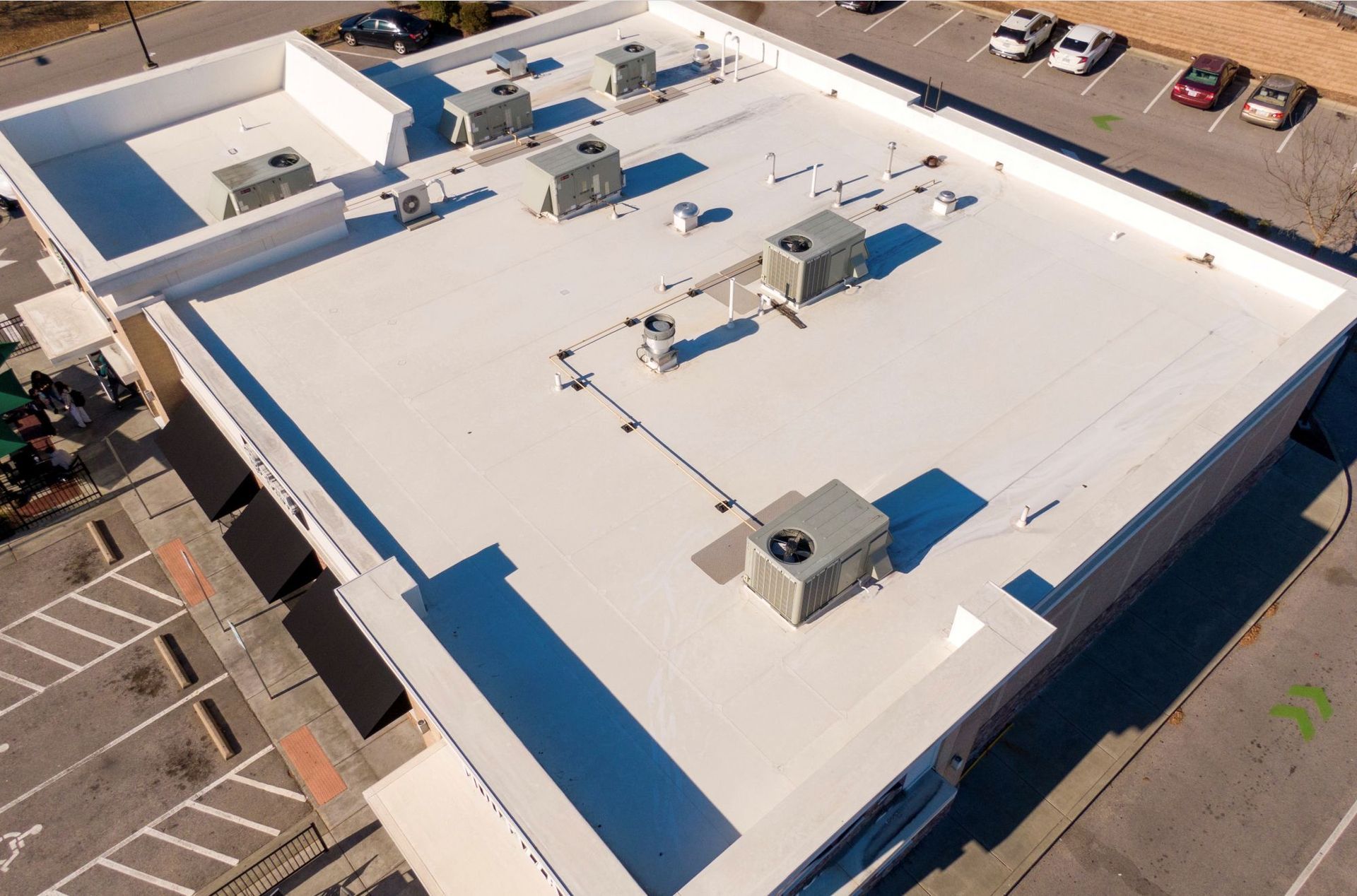
Commercial roofs in Miramar, FL, do not fail randomly. They wear down in predictable ways because the environment here puts constant stress on roofing systems year-round. Heat, humidity, storms, and sudden weather shifts all affect how long a roof lasts and how much maintenance it needs to stay reliable.
If a roof fails early in Miramar, it is rarely because the material was “bad.” It is usually because the system was not installed, maintained, or evaluated with the local climate in mind. Understanding how Miramar’s conditions affect roofing systems is the difference between getting full value from a roof and paying for repairs long before you should.
This is why commercial roofing in Miramar, FL requires a different mindset than roofing in cooler or drier regions.
Miramar experiences high temperatures for most of the year, and that heat is not static. Roof surfaces expand during the day and contract at night, creating daily movement that stresses seams, fasteners, flashing, and transitions.
Over time, that constant expansion and contraction weakens connection points. Seams begin to separate slightly. Flashing loses its tight seal. Adhesives and coatings dry out faster than expected. These changes often go unnoticed because they happen gradually, but once water finds an opening, the damage accelerates.
Heat also shortens the lifespan of roofing materials if they are not designed or installed to handle prolonged exposure. Membranes can become brittle. Protective layers break down faster. Reflective coatings lose effectiveness when maintenance is delayed.
This is one of the main reasons roofs in Miramar often fail earlier than identical systems installed in milder climates.
Miramar’s humidity does not just make the air uncomfortable. It increases moisture exposure across the entire roofing system, especially when combined with heat and rain.
When humidity stays high, trapped moisture under the roof surface has fewer opportunities to dry out. That means small leaks do not resolve themselves between storms. Instead, moisture stays active inside insulation layers, weakening materials and spreading damage laterally.
High humidity also increases the risk of mold, corrosion, and material degradation. Metal components corrode faster. Wood elements rot sooner. Insulation loses thermal performance when moisture stays present.
This is why Miramar commercial roof maintenance cannot be reactive. By the time water stains appear inside, the moisture problem is usually well established.
Storms in Miramar are not limited to hurricanes. Seasonal thunderstorms bring heavy rain, wind uplift, and sudden pressure changes that test every part of a commercial roof.
Wind does not need to tear a membrane off to cause damage. Repeated uplift can loosen fasteners, weaken edge details, and stress flashing around penetrations. Heavy rain overwhelms drainage systems that are already compromised by debris or poor slope, leading to ponding water that accelerates membrane wear.
This is where commercial roof weather damage in Miramar becomes deceptive. The roof may look intact from the ground, but the system may already be compromised in areas that only show problems weeks or months later.
When storms happen back-to-back, as they often do in South Florida, the roof has little recovery time. Minor vulnerabilities turn into active leaks faster than most property owners expect.
Drainage performance plays a major role in determining commercial roof lifespan in Miramar. Standing water adds weight, increases heat absorption, and keeps membranes submerged longer than they are designed to handle.
Even roofs built with proper slope can develop drainage problems over time. Debris buildup, shifting insulation, or settling structural elements can change water flow patterns. Once water begins to pond regularly, material breakdown accelerates.
Ponding water also hides developing issues. Cracks, seam separation, and surface deterioration are harder to detect under standing water. This delays repairs and allows damage to spread unnoticed.
Effective maintenance focuses heavily on drainage because a roof that sheds water properly almost always lasts longer than one that does not.
Miramar’s proximity to coastal environments means airborne salt and pollutants are part of the equation, even if the property is not directly on the water.
Salt accelerates corrosion of metal components, including fasteners, flashing, and edge details. Over time, this weakens critical connection points that hold the roofing system together.
Airborne contaminants can also affect coatings and membranes, reducing reflectivity and protective performance. When combined with heat and moisture, these contaminants shorten service life faster than many owners anticipate.
This is why South Florida commercial roofing decisions cannot be made solely on material type. Installation quality, detailing, and maintenance planning matter just as much.
When a commercial roof fails prematurely in Miramar, it is usually due to a combination of factors rather than a single issue:
●
Installation details that did not account for movement and heat stress
●
Drainage systems that were never maintained
●
Flashing and penetrations that aged faster than expected
●
Deferred inspections that allowed moisture to spread
●
Repairs that addressed symptoms instead of root causes
Each of these problems is manageable on its own. Together, they shorten roof life dramatically.
In Miramar, skipping maintenance does not just increase risk. It changes the entire cost curve of roof ownership.
Regular inspections identify early wear before it becomes structural damage. Maintenance allows small issues to be corrected while access is easy and costs are controlled. It also provides documentation that helps owners decide whether repair, re-roofing, or replacement makes the most financial sense.
Without maintenance, decisions are forced during emergencies. Emergency work costs more, disrupts operations, and limits options. At that point, the roof controls the timeline instead of the owner.
Miramar’s climate often pushes roofs to a decision point sooner than expected. The choice between re-roofing and full replacement depends on how widespread the damage is and whether the underlying structure is still sound.
Re-roofing can be effective when the existing system has aged but remains stable. Replacement becomes necessary when moisture has compromised insulation, when failures occur across multiple zones, or when repairs no longer hold after storms.
These decisions should be based on documented conditions, not assumptions. Climate-driven wear patterns make guesswork expensive.
The most successful commercial properties in Miramar treat roofing as a lifecycle system rather than a one-time project. They plan inspections, budget for maintenance, and make upgrade decisions based on how the roof is aging in real conditions.
This approach reduces surprises, spreads costs over time, and extends system life. It also prevents the operational disruptions that come with emergency leaks and rushed construction.
Miramar roofs break down in predictable ways, and the expensive part is waiting until the damage shows up inside the building. If you want to protect your roof lifespan, reduce surprise repairs, and avoid paying twice for the wrong fix, contact C.A.R.E. Construction and book a roof assessment that shows what is happening on your roof and what it needs next.
1) How does Miramar’s heat shorten a commercial roof’s lifespan?
Heat makes roof materials expand during the day and contract at night, which stresses seams, flashing, fasteners, and transitions. Over time, that movement weakens connection points and increases leak risk.
2) Why do commercial roof leaks in Miramar, FL, feel like they “come out of nowhere”?
Because moisture can travel under the roof system before it shows inside. A small opening at a seam or flashing point may not appear indoors until insulation is saturated or water reaches a low point.
3) What parts of a commercial roof usually fail first in Miramar, FL’s climate?
The highest-risk areas are typically seams, flashing around penetrations, parapet transitions, edge terminations, and drainage zones. These are the spots most affected by movement, wind uplift, and water flow.
4) How does humidity make roof problems worse in Miramar, FL?
High humidity slows drying and keeps trapped moisture active longer. That can accelerate deterioration, increase the chance of mold and corrosion, and allow damage to spread farther before it becomes visible.
5) Why is ponding water such a big deal for flat roofs in Miramar, FL?
Standing water adds weight, increases heat exposure, and keeps roof surfaces saturated longer than intended. It also hides developing issues, which delays repairs and increases the chance of interior damage.
6) How often should a commercial roof be inspected in Miramar, FL?
Most commercial roofs should be inspected at least twice per year, and again after major storms. Regular inspections catch early wear and drainage problems before they turn into expensive leaks.
7) Is it normal to need more frequent maintenance in South Florida compared to other states?
Yes. Heat, humidity, frequent rain, and storm activity increase wear and speed up deterioration. Maintenance that might be “optional” elsewhere is often what prevents early failure in South Florida.
8) When is re-roofing a better option than continued repairs?
Re-roofing can make sense when problems are recurring but the system is still stable underneath. If repairs are happening repeatedly in the same zones, re-roofing may be the more cost-effective next step.
9) When does a roof usually need full replacement instead of repair?
Replacement becomes likely when failures are widespread, moisture has compromised insulation, or leaks return even after proper repairs. If the system is past end-of-life performance, patching becomes a repeating expense.
10) What is the most expensive consequence of delaying roof maintenance?
It is not just the roof repair cost. Delays can lead to interior damage, inventory and equipment loss, tenant disruptions, mold complaints, emergency response costs, and larger corrective scopes once moisture spreads.
CGC1537535 | CCC1335982 | CMC1251555 | CFC1434506
At C.A.R.E. Construction, we uphold industry standards by using top-quality materials, cutting-edge tools, and delivering exceptional service to our clients.

2514 Hollywood Blvd STE 408
Hollywood, FL 33020

Broward:
Miami:
Tampa:
