

2514 Hollywood Blvd STE 408
Hollywood, FL 33020
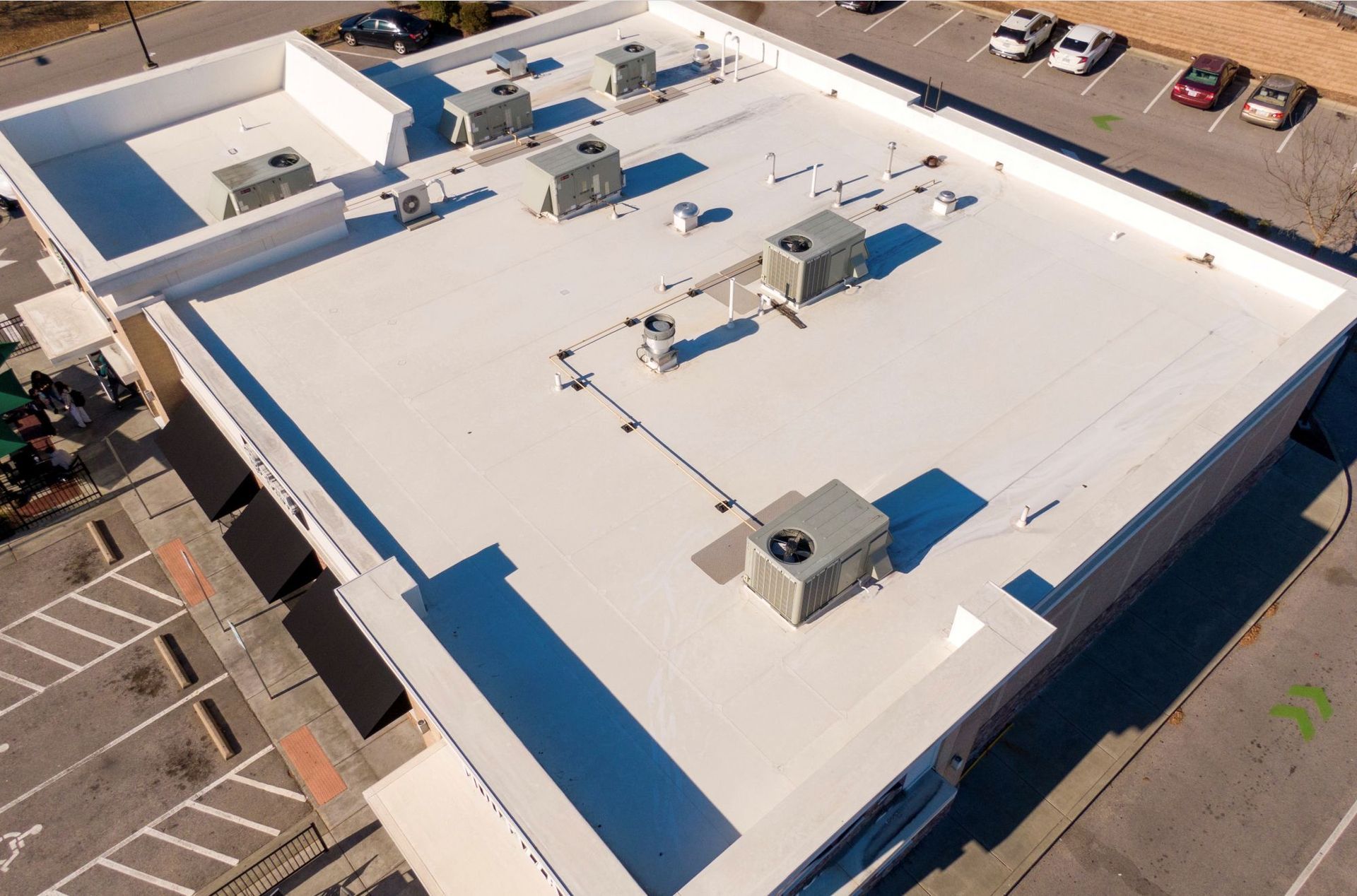
Replacing a commercial roof is one of those decisions that feels straightforward until you are the one approving the scope. You are not just paying for materials and labor. You are paying for uptime, protection, and the ability to run your business without leaks, interior damage, or tenant disruption turning into a weekly problem.
That is why commercial roofing in Plantation, FL is not simply a “replace it when it’s old” situation. The smarter approach is knowing what drives cost, what causes early failure, what you should demand from an assessment, and what decisions lock you into expenses you did not plan for.
This guide breaks down what matters before you commit to a replacement, so you avoid rushed approvals, avoid paying twice, and avoid installing a system that does not fit the building.
A commercial roof is a system. The membrane is only one part of it. The details that decide whether the roof performs long term are usually the areas people don’t focus on when they are stressed about budget.
Think seams, flashing, penetrations, drainage, transitions, and edge terminations. If those details are not handled correctly, a brand-new roof can still leak. And when that happens, it is not only frustrating. It is expensive, disruptive, and often tied to arguments over what the work should have included.
Before replacing a roof, the question is not “Which material is best?” The real question is: What system details are currently failing, and what needs to change so the next roof does not fail the same way?
Many commercial roofs get replaced for the wrong reason. The owner sees recurring leaks and assumes replacement is the only fix. Sometimes that is true. Other times, a roof is leaking because one high-risk zone is failing and the rest of the system still has usable life.
Replacing without understanding failure patterns leads to two painful outcomes:
●
The roof is replaced earlier than necessary, increasing capital expense with no real added value.
●
The roof is replaced, but the same type of failure repeats because the underlying problem was never corrected.
Common drivers of recurring roof failure include poor drainage and ponding, deteriorated flashing around penetrations, weak parapet transitions, edge uplift, and poor prior repair compatibility.
The best replacement decision starts with documented roof conditions, not assumptions.
A lot of owners focus on the replacement cost itself. The bigger risk is approving a scope that does not actually solve the building’s problem.
That is how you get the worst-case scenario: a “new roof” followed by “new leaks,” followed by emergency repairs and tenant complaints that should have been eliminated by replacement.
If you are replacing a roof because of leaks, the scope should clearly address:
●
Where water has been entering and how it will be prevented
●
How drainage will be corrected and maintained
●
What happens at penetrations, edges, transitions, and parapets
●
How existing wet insulation or compromised areas will be handled
●
What is being upgraded so the new system performs better than the old one
Replacement is supposed to eliminate uncertainty. If the scope still feels vague, that is a warning sign.
Commercial roofing estimates can vary widely, and it is tempting to pick the lowest number to protect the budget. But in roofing, low bids often come from scope gaps that show up later as change orders, repeat service calls, and premature failure.
That is especially true when a contractor prices the “surface work” but underestimates what the building needs at critical details.
A better comparison is not price versus price. It is:
●
What exactly is included
●
What is excluded
●
What risks are being left behind
●
How the contractor handles the roof as a system
If an estimate is significantly lower than others, it is usually not because the contractor is being generous. It is because something is missing.
Every building is different, but most commercial replacement budgets rise or fall based on a few predictable factors.
One major driver is access and staging. If the building is tight, multi-level, tenant-occupied, or requires complex protection measures, labor increases.
Another driver is tear-off versus overlay. Removing existing layers, disposing of materials, and addressing substrate issues increases cost, but it can also be necessary for performance and long-term reliability.
Drainage corrections also matter. A roof that ponds water will keep failing. Fixing slope and drainage can be the difference between a roof that lasts and one that becomes a repeat issue.
Penetrations and edge details also add complexity. Rooftop equipment, multiple penetrations, parapets, and transitions require time and precision, and that affects budget.
That is why roofing costs Plantation, FL businesses can vary drastically even for buildings that look similar from the street.
Replacement is not always step one. Sometimes the building can be stabilized with targeted repairs. Sometimes re-roofing is the better value because it addresses widespread wear without full reconstruction.
The decision usually depends on:
●
Whether failures are isolated or widespread
●
Whether insulation is wet and how far moisture has spread
●
How the roof has been repaired historically
●
Whether the system is near end of service life
●
Whether drainage issues are structural or maintenance-related
If you are not sure which category the roof falls into, the next step should be documentation and assessment, not a replacement approval.
Different buildings have different needs. Some need maximum reflectivity to reduce heat load. Some need durability under regular rooftop traffic. Some need systems that handle specific drainage patterns better than others.
The best choice is the one that matches the building’s structure, use, and risk profile, not the one that is currently popular.
When owners start asking about commercial roofing systems in Plantation, the most useful conversation is not “Which one is best?” It is “Which one fits the building and reduces our repeat failure risk?”
That decision should consider exposure, drainage design, rooftop equipment, maintenance access, and long-term operating needs.
A commercial replacement is not just a construction job. It affects business continuity.
If the building is tenant-occupied, there should be a clear plan for:
●
Work hours and noise expectations
●
Safety and access control
●
Material staging and protection
●
Communication cadence and points of contact
●
Phasing strategy to limit disruption
If a contractor cannot clearly explain how disruption will be managed, the project tends to become stressful for everyone involved.
When replacement is approved, documentation is not “extra.” It protects the owner.
You want clarity on:
●
Current roof condition and failure areas
●
What the replacement scope includes and why
●
Photo documentation where relevant
●
A clear description of system details and transitions
●
Warranty requirements and how installation aligns
This protects decision-making now, and it also protects you later if performance questions arise.
Most owners do not replace a roof because they love construction. They do it because the roof is interfering with the business.
That might mean tenants are complaining. Inventory is at risk. Operations are disrupted. Emergency calls are becoming routine. Or the building cannot stay dry through a season that should not be a gamble.
A replacement should be planned around eliminating those outcomes. That is what a real business roof replacement in Plantation is supposed to accomplish: stability, protection, and a roof system that does its job without constant attention.
A commercial roof replacement should end the leak cycle, not restart it with a new system and the same weak points. If you are considering replacement in Plantation, do not approve a scope based on age or price alone. Contact C.A.R.E. Construction for an assessment that documents what is failing, what is causing it, and what the roof actually needs next, so you can choose the right system and scope before the cost escalates.
How do I know if my commercial roof truly needs replacement instead of repairs?
Replacement is more likely when leaks are recurring across multiple areas, seams and flashing are failing broadly, insulation is wet, or repairs no longer hold after storms. If issues are widespread, repairs stop being predictable.
What is the biggest mistake business owners make before replacing a roof?
Approving a vague scope. When the scope does not clearly address drainage, penetrations, flashing, and transitions, the building can end up with repeat leaks even after replacement.
Why can two roof replacement quotes be so different for similar buildings?
Because scope is often different. Tear-off depth, wet insulation removal, drainage corrections, edge details, staging requirements, and tenant protection plans can change the cost significantly.
What should a roof replacement scope include so it actually solves the problem?
Clear detail work at seams, penetrations, edges, parapet transitions, and drainage points, plus a plan for handling wet insulation and any substrate issues. These areas typically decide whether the roof performs long term.
How do drainage issues affect whether replacement is necessary?
Poor drainage and ponding accelerate deterioration and increase leak risk. If ponding is chronic, replacement should address drainage corrections, otherwise the new roof can fail early.
How do I choose the right roof system for my building?
The best system depends on building structure, drainage, rooftop equipment, foot traffic, exposure, and maintenance access. A system should be selected based on performance needs, not trends.
How disruptive is a commercial roof replacement for tenants and operations?
It depends on planning. With proper coordination, controlled work zones, and clear scheduling, disruption can be reduced. Without a plan, replacements can trigger tenant complaints and operational headaches.
What documentation should I ask for before approving a replacement?
You should have condition documentation, photos of failure areas, a clear scope of work, and a description of how the new system will address existing weaknesses. This protects your decision and reduces surprises.
Will a new commercial roof automatically eliminate leaks forever?
Not automatically. A new roof performs when critical details are installed correctly and drainage is functioning. If weak points are ignored, leaks can return even with new materials.
When is the best time of year to plan a roof replacement in South Florida?
Planning ahead is the key. Many owners prefer to schedule work outside peak storm periods when possible, but the roof’s condition and leak risk should guide timing more than the calendar.
CGC1537535 | CCC1335982 | CMC1251555 | CFC1434506
At C.A.R.E. Construction, we uphold industry standards by using top-quality materials, cutting-edge tools, and delivering exceptional service to our clients.

2514 Hollywood Blvd STE 408
Hollywood, FL 33020

Broward:
Miami:
Tampa:
