

2514 Hollywood Blvd STE 408
Hollywood, FL 33020
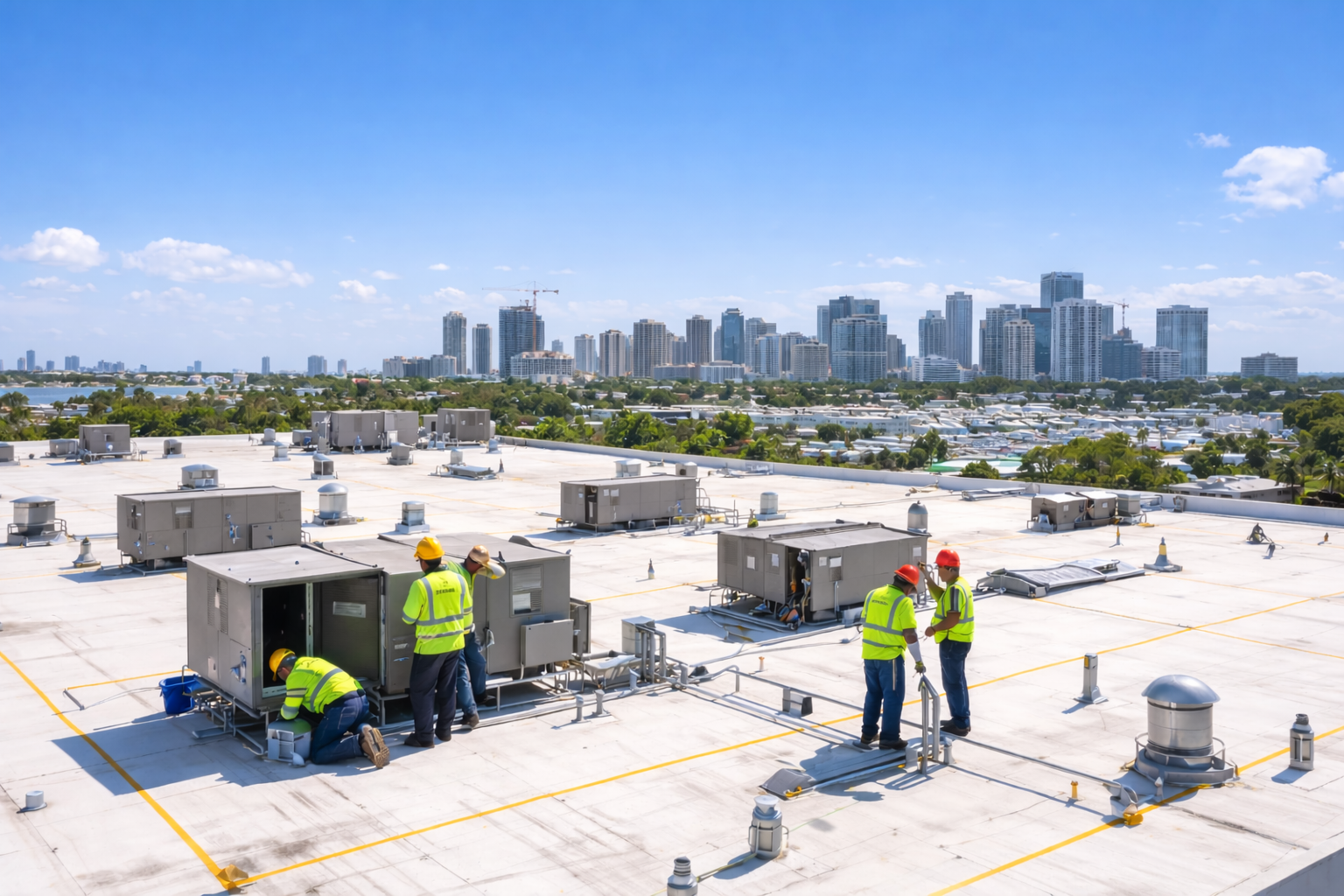
For a long time, commercial roofing was treated like a “handle it when it leaks” category. If nothing was dripping inside, it felt safe to ignore. That approach is fading fast in Fort Lauderdale, and it is not because building owners suddenly love maintenance.
It is because the math changed.
In Fort Lauderdale, one avoidable roof issue can trigger interior damage, tenant complaints, business disruption, and emergency scopes that cost far more than planned upkeep. Add South Florida storms, heat stress, and flat-roof drainage realities, and many property owners are realizing something simple: reacting late is the most expensive way to manage a roof.
That shift is exactly why more decision-makers are prioritizing commercial roofing in Fort Lauderdale, FL through a proactive maintenance mindset rather than a last-minute repair mindset.
A commercial roof protects revenue, not just interiors.
When a leak happens, it rarely stays contained. It can affect ceiling systems, lighting, electrical zones, inventory, tenant spaces, customer areas, and staff productivity. It can create odors, humidity complaints, and cleanup costs that show up immediately. Even worse, it can damage relationships with tenants who expect the building to function.
That is why proactive maintenance is becoming the standard. Businesses are not switching because it sounds responsible. They are switching because roof uncertainty disrupts operations, and disruption is expensive.
Most commercial leaks do not start in the “middle of the roof.” They start at details.
●
Seams that separate over time
●
Flashing that breaks down around penetrations and rooftop equipment
●
Drains that clog, causing ponding water and stress
●
Parapet transitions and edge terminations that loosen under wind uplift
●
Areas where prior repairs were incompatible with the system
These failure points are common and predictable. What makes them costly is letting them develop unseen until they become active water intrusion.
Proactive maintenance focuses on those details before they fail.
Fort Lauderdale conditions make roofing problems move faster.
Heat creates daily expansion and contraction that stresses seams and transitions. Humidity keeps moisture active longer once it enters the system.
Wind-driven storms test weak points repeatedly. Flat roofs depend heavily on drainage, and drainage issues do not fix themselves.
So when a building waits for a visible leak, it is usually dealing with a problem that has already progressed.
That is the difference between a controlled repair and an emergency. Controlled work happens when the roof is still stable and dry. Emergency work happens when moisture has already spread and decisions must be made under pressure.
Proactive roofing is not “checking the roof once and calling it a day.” It is a consistent process that reduces surprises and extends roof reliability.
It usually includes:
●
Scheduled roof inspections around the times the roof takes the most stress
●
Drainage checks and clearing to prevent ponding and overflow
●
Review of seams, flashing, penetrations, edges, and transitions
●
Early corrections before leaks form
●
Documentation so owners can make decisions based on proof, not guesses
In short, it is a system for keeping the roof dependable instead of hoping it stays dependable.
Many commercial properties in Fort Lauderdale have low-slope or flat systems, and those systems do not behave like steep roofs when moisture gets in.
Water can travel under the system before it shows inside. Ponding water can quietly accelerate membrane wear. Small seam issues can become larger quickly after a storm sequence. Rooftop equipment and penetrations add complexity and more potential failure zones.
That is why owners are placing more emphasis on flat roof care that is planned and consistent, rather than reactive.
This is the part that wins over even the most budget-focused owners.
Proactive maintenance typically reduces the most expensive outcomes:
●
Emergency leak response after hours or during storms
●
Interior remediation and repeated tenant disruptions
●
Wet insulation that expands the repair scope
●
Premature replacement decisions made under stress
●
Paying repeatedly for temporary fixes that do not address the cause
A roof does not need to be perfect. It needs to be reliable. Reliability is cheaper to maintain than to recover.
Commercial owners and property managers are tired of approving work without clarity.
A vague recommendation creates risk. It increases the chance of approving the wrong scope. It also delays decisions because stakeholders hesitate when they cannot see what is wrong.
Proactive maintenance solves that by creating documentation before the roof becomes an emergency. Owners have photos, conditions, and clear observations that support budget planning and faster approvals.
When decisions are calm and evidence-based, projects are smaller, smoother, and less disruptive.
One of the biggest frustrations with reactive roofing is that the roof controls the schedule.
Leaks do not care about your busy season. They do not care about tenant turnover. They do not care about staffing or budgets. They show up when they show up.
Proactive maintenance gives owners more control. It helps roofs last longer, and it helps replacement decisions happen on a planned timeline rather than in crisis mode.
That control is a major reason businesses are moving toward roofing service plans instead of “call someone when it’s leaking” strategies.
The shift is not just “more maintenance.” It is smarter maintenance.
Fort Lauderdale owners are prioritizing:
●
Keeping drainage performing year-round
●
Catching detail failures early
●
Reducing emergency calls and tenant disruptions
●
Making decisions with documentation, not assumptions
●
Extending roof life while controlling costs
This is why commercial roof maintenance in Fort Lauderdale is increasingly seen as a business protection strategy, not a building expense.
If your property has recurring leaks, drainage issues, or a roof that has become a constant question mark, proactive maintenance is how you regain control before the next storm forces a rushed decision. Reach out to C.A.R.E. Construction and ask about a maintenance approach that documents roof condition, targets early failures, and reduces emergency disruptions before they start.
What does “proactive commercial roofing maintenance” actually mean?
It means inspecting and servicing the roof on a schedule so seams, flashing, penetrations, edges, and drainage issues are addressed early, before they become active leaks and emergencies.
Why are Fort Lauderdale businesses moving away from reactive roof repairs?
Because reactive repairs usually happen after water has already entered the system. That leads to interior damage, tenant disruption, emergency costs, and repeat leaks when the true failure point is missed.
How often should commercial roofs be inspected in Fort Lauderdale?
Most commercial roofs should be inspected at least twice per year, usually before and after storm season, plus additional inspections after major storms or high-wind rain events.
What are the most common failure points proactive maintenance focuses on?
Seams, flashing around penetrations, drains, scuppers, parapet transitions, edge terminations, and areas with past repairs. These are the spots where most repeat leaks begin.
Why is drainage such a big part of maintenance for flat commercial roofs?
Because ponding water accelerates membrane wear and pushes stress onto seams and transitions. Keeping drains clear and runoff working reduces leak risk and extends roof performance.
Can proactive maintenance extend roof lifespan in South Florida?
Yes. Catching early wear and correcting small issues prevents moisture spread and system deterioration, which helps roofs last longer and reduces premature replacement decisions.
What is usually included in a commercial roofing service plan?
A service plan typically includes scheduled inspections, drainage checks, review of critical details, minor corrective work as needed, and documentation so owners can make decisions based on proof.
How does proactive maintenance help reduce roof-related business disruption?
It lowers the chance of sudden leaks that interrupt tenant spaces, inventory areas, customer zones, and daily operations. It also reduces emergency calls and after-hours repair situations.
Is proactive maintenance worth it if the roof is not currently leaking?
Yes. Most costly failures begin before leaks are visible inside. Maintenance is most valuable when it prevents the first leak, not when it reacts to the tenth.
What should owners expect after a proactive roof visit?
Clear documentation of roof condition, photos of vulnerable areas, notes on risk level, and a straightforward recommendation on what needs attention now versus what can be monitored.
CGC1537535 | CCC1335982 | CMC1251555
At C.A.R.E. Construction, we uphold industry standards by using top-quality materials, cutting-edge tools, and delivering exceptional service to our clients.

2514 Hollywood Blvd STE 408
Hollywood, FL 33020

Broward:
Miami:
Tampa:
